Basic HTML Version


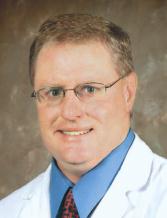
Miles Hutson, MD
Family Practice
Joined 1979
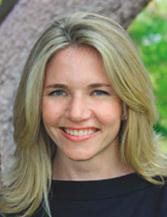
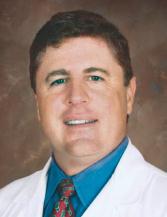
Emily Meyer, MD
Family Practice
Joined 2007
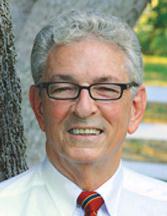
John Meyer, MD
Family Practice
Joined 1975
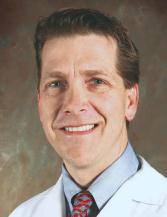
Richard
Rowland, MD
Family Practice
Joined 1998
Matt Windrow, MD
Family Practice
Joined 1999
Zachary
Windrow, MD
Family Practice
Joined 2004
Recovering close to home
R
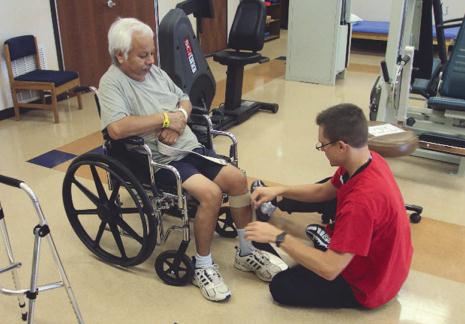
icky Torres of Sabinal is very grateful to the sta
at Medina Regional Hospital. “When I came into
the hospital, I could not sit up in bed or walk,”
he says. “ e [physical] therapists are helping
me get stronger every day.” Torres has been
receiving inpatient rehabilitation in Hondo a er
a stroke partially paralyzed his le side.
“We have him in the Swing Bed Program so that he
can work on his basic mobility,” says Rehabilitation
Director Terri Brandon. “Mr. Torres’ goal is to be able
to function outside the hospital. By
function
we mean
the ability to get in and out of bed, to the bathroom,
and to perform daily activities in and out of his home.
Basically we are teaching him what to do for himself
and to do it safely.
“With physical therapy, we teach him which muscles
to activate to move the body. In stroke patients there is a
window of opportunity for some muscle control to return.
Any muscles that can move can also be strengthened.”
For stroke patients like Torres, receiving rehabilitation
at Medina Regional Hospital means he’s close to home, so
friends and family can drop in and visit without having
to drive long distances.
“Everyone has been so nice to me,” Torres says. “I
couldn’t ask for better nurses. And the therapists answer
all my questions and explain to me how the brain and the
muscles have to be retrained to move a er the stroke.”
e Swing Bed Program, sometimes referred to as
Skilled Nursing, is a special program reserved for small
rural hospitals with less than
beds. e program allows
patients to recover from an accident, illness or surgery in
a close-to-home facility. Stroke patients or patients with
chronic conditions such as COPD can also bene t from
the program.
Patients may remain in skilled care as long as there
is a documented need for that level of care. Swing bed
services are reimbursed by Medicare and most insurance
companies.
To learn more about the Swing Bed Program, visit
medinahospital.net
and click on “Swing Bed
Program” under “Services.”
DOCTOR V I S I T S
Can we talk?
From water-cool er chat s to f i rst
dinner dates, we tend to get from a
conversation what we put in. A two-way
communication, a er all, takes two.
So when it comes to your relationship
with your doctor, are you more than a
good listener? Do you also ask questions
and mention things about your health that
he or she might need to know? It matters
a lot. Good communication can lead to
better healthcare for you.
If you’d like to help improve your
patient-doctor talks, here are some ideas:
Do share.
Your doctor can check your
blood pressure and more. But he or she
won’t know a lot of other things without
your help, such as:
Your health history and lifestyle habits.
Paint an honest picture, including about
whether you smoke, exercise or eat well.
And try not to be embarrassed about
sensitive topics.
All the medicines that you take. Make
a list of your prescription and over-the-
counter drugs and supplements. Let the
doctor know of any side e ects or bad
reactions you’ve had to medicines.
Symptoms you’ve noticed. Include
what seems to trigger them and what
makes them better.
Ask away.
Bring a l ist of your
health questions and concerns to each
appointment so you won’t forget. Also,
don’t be afraid to ask questions about a
diagnosis or about the medicines, tests or
treatments that your doctor recommends.
Feel free to take notes.
Would you repeat that, please?
Ever
nodded yes in a conversation, even though
you really didn’t understand? Maybe you
were too embarrassed to speak up. Don’t
be. Speaking up is especially important if
you don’t understand what your doctor
is telling you. Ask to have something
explained until it’s clear.
If you are new to the area and
need a physician for you or your
fami ly, one of our Fami ly Practice
physicians may be right for you. Each
of our doctors is board-certi ed and
trained to treat patients of all ages. For
more information on the physicians
a liated with Medina Healthcare System,
visit our Physician Directory at
medinahospital.net
.
Sources: Agency for Healthcare Research and Quality; U.S.
Department of Health and Human Services
I
F A L L 2 0 1 2
M E D I N A H E A L T H N E W S
3
N E W S , V I E W S & T I P S
H E A L T H T A L K
SCREENINGS
Buddy up
for tests
Would you put o doing something that
could possibly save your life?
It isn’t exactly logical, but that’s just what
many people do when they choose to put o
screening tests that can help nd diseases
early, when they are o en easier to treat.
Still need a little extra motivation to
get screened? You might want to grab
a partner. After all, misery does love
company! So make a deal with your spouse
or a good friend.
You might decide to schedule a
colonoscopy in the same week as your
spouse. Or buddy upwith a female friend and
go for your yearly mammograms together.
Reward yourselves a erward by doing
something special, like having a nice meal
out or going to a movie.
Sources: American Cancer Society; Centers for Disease Control and
Prevention; U.S. Department of Health and Human Services
HOSP I TAL S
How to be a
good visitor
Call ahead.
Ask the nurse if children,
owers or food are allowed. If kids are OK,
and they’re not sick, remind them not to
run around or touch the equipment.
Fol low directions.
Check for any
instructions posted on the door to your
loved one’s room. For example, sometimes
it’s necessary to take special precautions,
such as wearing a mask. If that’s the case,
talk to the nurse before you enter the room.
Scrub those hands.
Remembering to
wash or sanitize them before you enter
and a er you leave the room helps avoid
potentially bringing germs in or taking
them with you.
Give well-wishes by phone if you’re
sick.
If you’ve recently caught a bug or are
just getting over one, it’s best to steer clear
for now. A bad cough, fever or diarrhea are
some stay-home signs.
Source: Association for Professionals in Infection Control and
Epidemiology
If you have a friend or loved
one in the hospital, why not
send them an e-card? Go to
our “Patients and Visitors”
section at
medinahospital.net
,
and click on “Cheer Cards” to
send a card by email.